A hostile obituary
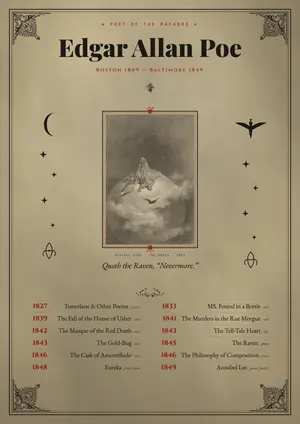
Poe died in Baltimore on 7 October 1849. Two days later, the New-York Daily Tribune published an obituary signed “Ludwig”. It opened with the claim that few people would mourn Poe because he had few friends. Ludwig was Rufus Wilmot Griswold, an editor who had already quarrelled with him.
The pseudonym mattered. It gave the obituary the tone of an outside judgement, while the author was already part of Poe’s literary world. The first public portrait of the dead writer was therefore written by someone with a personal history to settle.
The editor becomes the authority
Griswold then presented himself as Poe’s literary executor and prepared posthumous editions of his work. His memoir described a tortured, solitary figure and repeated claims that later research has treated as false, including the familiar story of drug addiction.
Because the memoir travelled with Poe’s poems and stories, the portrait gained the authority of an edition. Readers did not encounter the biography separately from the work. They met the work through it.
Baudelaire opens another door
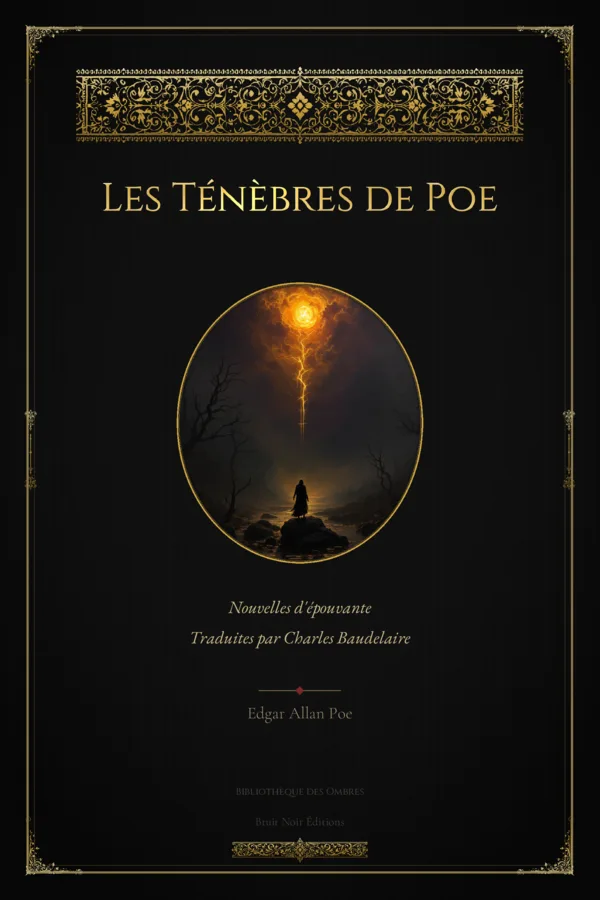
Across the Atlantic, Charles Baudelaire began translating Poe for French readers. Michel Lévy published five Poe volumes between 1856 and 1865, giving the author a second literary life while his reputation in the United States remained damaged.
The contrast is still striking. One editor made a legend that narrowed Poe into a caricature. One translator made room for the atmosphere, precision and strange beauty of the stories. A reputation can be a form of design, built by what an editor chooses to repeat and what a reader is allowed to notice.