A book with a borrowed history
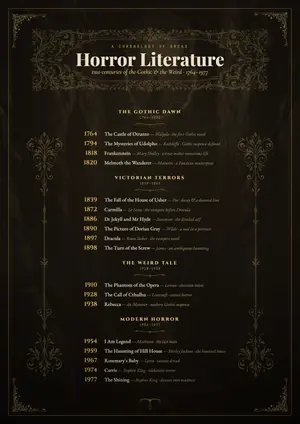
In 1764, The Castle of Otranto appeared without Horace Walpole’s name on the cover. It presented itself as the English translation of an old Italian text, supposedly recovered from a Catholic family library. The title page named an Italian author, Onuphrio Muralto, and an English translator, William Marshal. Neither was Walpole.
The pose mattered. A gothic novel asks its reader to enter a world where the past has not stayed buried. Walpole made that invitation before page one. The book did not merely contain an old castle and a family curse. It arrived looking like evidence from the world it described.
The British Library calls it the first gothic novel and notes both the anonymous 1764 publication and its claim to be a rediscovered medieval story. That claim is not a footnote to the novel. It is the first scene.
The helmet that changes the weather
Walpole did not keep the deception quiet for long. Early in the story, Conrad, the only son of Prince Manfred, is about to marry when a gigantic helmet falls into the castle courtyard and kills him. The event is too large, too abrupt and too impossible to be explained away.
Manfred’s fear is practical as well as supernatural. His line of inheritance is in danger. The castle answers with moving portraits, hidden routes and apparitions that seem to carry an older claim on the family. The point is not simply that a place is haunted. It is that the past has returned with paperwork of its own.
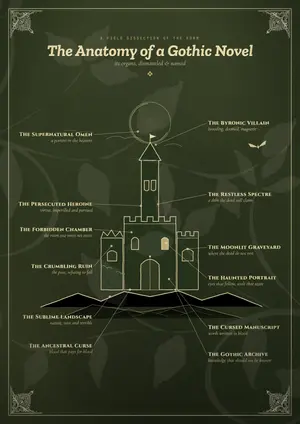
That mixture became a durable gothic grammar: a threatened heir, a building full of locked history, and an object that refuses to behave like an object. Later writers changed the furniture, but they kept the pressure.
When Walpole signs the story
The first edition found readers. For the second edition, Walpole stopped pretending to be the translator and identified himself as the author. He also added the subtitle A Gothic Story.
That small change did two things at once. It ended the hoax and gave a name to the kind of fiction the hoax had made possible. The book could now be read as an invention, but it had already shown how much force invention gains when it looks like an archive.
The result is a useful paradox. Gothic fiction begins with a false document, yet the false document is part of the truth of the genre. It teaches the reader that an old-looking source can be a door rather than a guarantee.
Why the trick still works
It would be lazy to call Walpole an early maker of fake news. He was selling a novel, not reporting events, and his readers eventually received the correction in the second edition. But the mechanism is familiar. A story can feel more convincing when it appears to come from a discovered file, a forgotten witness or a source that looks older than the person sharing it.
That is why The Castle of Otranto still feels modern at Halloween. Its castle is a machine for making the present uneasy. The reader is asked to wonder whether the document is genuine first, then whether the walls are.