The first question was how to win the hand
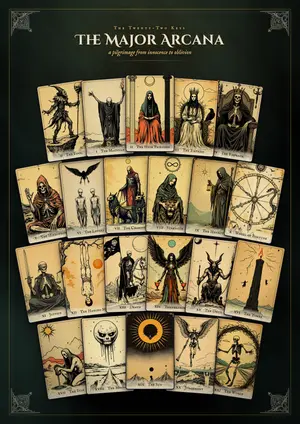
The oldest references to tarot date from the 1440s and 1450s, around Venice, Milan, Florence and Urbino. The deck used the Italian suits of cups, swords, batons and coins. It added twenty-one trump cards and the Fool to the ordinary ranks.
This was a game of tricks. Players had to follow, trump and take. The cards were elaborate, sometimes luxurious objects, but their first documented purpose was play.
That origin changes the way the familiar images appear. Death, the Wheel, the Lovers and the Fool did not arrive as a private answer to a reader’s question. They were figures inside a game with rules.
Divination arrived later
The Met notes that the association between tarot, fortune-telling and the occult gained currency in the nineteenth century. That does not make contemporary readings meaningless to the people who practise them. It does mean that the modern use should not be projected backward as the deck’s original purpose.
The history becomes more interesting when the two lives of the cards stay visible. Tarot is both a surviving game system and a powerful later language of interpretation. Its imagery could travel because it was already memorable: a procession of figures, ranks, reversals and turns of fortune.
A deck carries more than one past
The most durable objects are often the ones that can be read again. A game becomes an occult tool. A printed card becomes a work of art. A player sees a tactical possibility while another person sees a story.
The historical correction does not drain tarot of mystery. It gives the mystery another layer. Before a card could be drawn for an answer, it had to be dealt into a hand.