A Halloween figure with a publication date
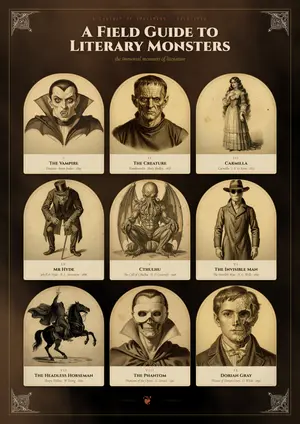
The Headless Horseman now feels inseparable from Halloween. Yet the figure’s most famous American version has a precise literary home: Washington Irving’s The Legend of Sleepy Hollow, first published in 1820 in The Sketch Book of Geoffrey Crayon.
The story follows Ichabod Crane, a Connecticut schoolmaster in a Dutch enclave of New York State. He is awkward, ambitious and susceptible to ghost stories. On a night ride home, he meets the galloping figure that gives the tale its lasting image.
Irving did not need to prove that a ghost existed. He gave the reader enough darkness, local talk and frightened imagination for the legend to do its work.
The setting is part of the scare
Sleepy Hollow is not simply a backdrop. The valley, the church, the bridge and the old Dutch community make the story feel rooted before the supernatural arrives. A familiar place becomes unstable because the people in it already know which stories belong there.
That is the cleverness of Irving’s approach. He takes a landscape and makes it a machine for producing folklore. The Headless Horseman does not just appear on a page. He seems to have been waiting in the road before Ichabod gets there.
The device travelled far beyond the Hudson Valley. The Library of Congress describes the story as one of the early American fictions to find popularity outside the United States, and its rider has continued through stage, film and television adaptations.
Why the rider returns every autumn
Halloween needs figures that can be recognised in silhouette. A horse, a cloak, an empty space where a head should be: Irving supplied all three. But the story lasts because the rider is also a test of belief. Is he a ghost, a local prank or the shape fear takes when someone rides alone through a place already full of stories?
The answer stays open enough for the legend to keep moving. That is what a good Halloween tale does. It gives a place one impossible thing and lets the rest of us bring it back every year.