The name belongs to Victor
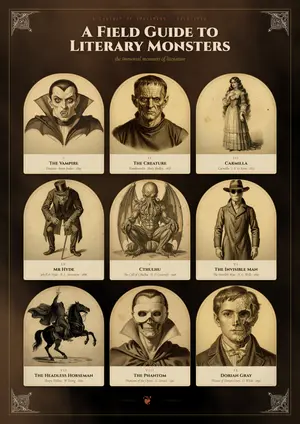
Mary Shelley’s novel, published anonymously on 1 January 1818, gives Victor Frankenstein a full name, a family and a long chain of choices. He studies, assembles a body, brings it to life and abandons it almost at once. The person he creates has no corresponding name.
That absence is not an omission the reader is meant to repair. The creature speaks, reasons and asks for companionship, but the novel keeps returning to the language Victor uses for him: creature, demon, wretch. Each label comes from the man who refuses to recognise him as a person.
The familiar mix-up is therefore stranger than it first seems. The public name is not simply attached to the wrong character. It has travelled from the person who made the creature to the creature he left behind.
A monster without a proper name
The Shelley-Godwin Archive traces the novel from Mary Shelley’s 1816 notebooks to the anonymous first edition of 1818. It also records an unusually literal trace of the creature’s anonymity. In an 1823 stage version that Mary Shelley approved, the role was represented by a line of dashes.
The dashes do not make the character less present. They make his position in the story clearer. Victor can name the world around him, but he does not grant that basic recognition to the being whose life depends on him.
This is why the creature carries more than the usual horror of an experiment gone wrong. His first wound is social. He is seen before he is known, and judged before he is named.
How the name moved
The novel itself keeps the distinction sharp. Later theatre, film, illustration and Halloween shorthand make it easier to lose. A single surname is quicker than explaining Victor, his experiment and the creature’s history, especially when a familiar silhouette can do the work in a second.
The shift has become visible in dictionaries as well. Modern definitions of “Frankenstein” can refer to a creation that escapes its maker’s control, alongside the popular use for the monster. Language has preserved the original relationship and blurred it at the same time.
That is more interesting than a correction at a quiz night. The name performs a version of the novel’s own plot. Victor creates a life, turns away from it and eventually loses his name to the thing he would not acknowledge.
The creator is still in the room
Frankenstein keeps returning whenever people worry about a maker losing control of what they have made. That is why it is so often pulled into arguments about new technologies. The comparison is not a prediction. It is a way to recognise an old question: what does a creator owe the thing that depends on them?
Mary Shelley does not settle that question with a neat moral. She leaves Victor and the creature facing each other across an absence that no costume can fill. Looking past the familiar monster means looking back at the creator whose name it still carries.